

QUAREP-LiMi WG3 was pleased to host a webinar presented by Daniel Schröder on the topic of the "Universal Laser Engine" with an improved homogeneous illumination profile.
The webinar introduced a versatile laser excitation platform designed for advanced fluorescence microscopy and highlighted its applications across multiple imaging modalities.
Abstract
The Universal Laser Engine is a user-friendly laserbox designed to provide a versatile excitation for advanced fluorescence microscopy. In a single box, it holds up to 6 laser wavelengths operating in modes ranging from picosecond-pulsed to continuous-wave, enabling its use across a wide range of imaging modalities. The Universal Laser Engine has been successfully tested in widefield microscopy, super-resolution localization microscopy, total internal reflection fluorescence (TIRF), and fluorescence lifetime imaging microscopy (FLIM). In addition, the Universal Laser Engine incorporates a novel speckle-suppression technology that generates a highly homogeneous flat-top hat profile that is applicable for high-speed imaging at exposure times down to microseconds. The system provides various trigger inputs and two fiber outputs for seamless integration into both existing and new microscopes. By combining flexibility, compact design, and state-of-the-art illumination uniformity, the Universal Laser Engine offers a powerful and adaptable solution for simplifying and modernizing fluorescence microscopy instrumentation.
We are pleased to announce that the QUAREP-LiMi consortium will be presenting five specialized workshops at the upcoming European Light Microscopy Institute (ELMI) meeting. Our sessions are designed to provide researchers with frameworks for improving image quality, ensuring data reproducibility, and implementing rigorous quality control standards in microscopy. The workshops will cover five critical pillars of instrument characterization:
-
The QUAREP-LiMi Tool Kit (WGs 1 & 2):
Discover how to streamline periodic quality assessments. We will present the latest developments in the Tool Kit, including user-friendly software tools for illumination power and stability (compatible with Nikon and Zeiss), as well as its data browser for long-term performance monitoring. -
Detector Performance & Photon Characterization (WG2):
Learn how to transition from "arbitrary digital units" (ADU) to actual photon counts using the Photon Transfer Curve (PTC) method. We will demonstrate protocols for characterizing photon conversion factors, read noise, and dynamic range for both point and area detectors. -
Assessing the co-registration accuracy of a microscope (WG4):
Chromatic aberration is a major source of spatial error in multi‑colour fluorescence microscopy. This workshop will show practical hints and tips to perform routine co‑registration measurement and analysis. -
Point Spread Function (PSF) Analysis (WG5):
This workshop provides a practical guide to PSF measurement—from beads slide preparation and image acquisition to analysis using open-source tools and integration with OMERO for longitudinal monitoring. -
The Light-Microscopy Metadata Model (LiMi-Model, WG7):
In collaboration with BioImaging North America, 4D Nucleome, and OME, we will introduce the LiMi-Model. This framework aims to harmonize the description of hardware and acquisition settings to ensure datasets are FAIR (Findable, Accessible, Interoperable, and Reusable) by design.

We warmly welcome our first member from Nigeria, Dr Olubunmi Ayobami Balogun, from the University of Ibadan who just joined Working Group 1, 4 and 12.
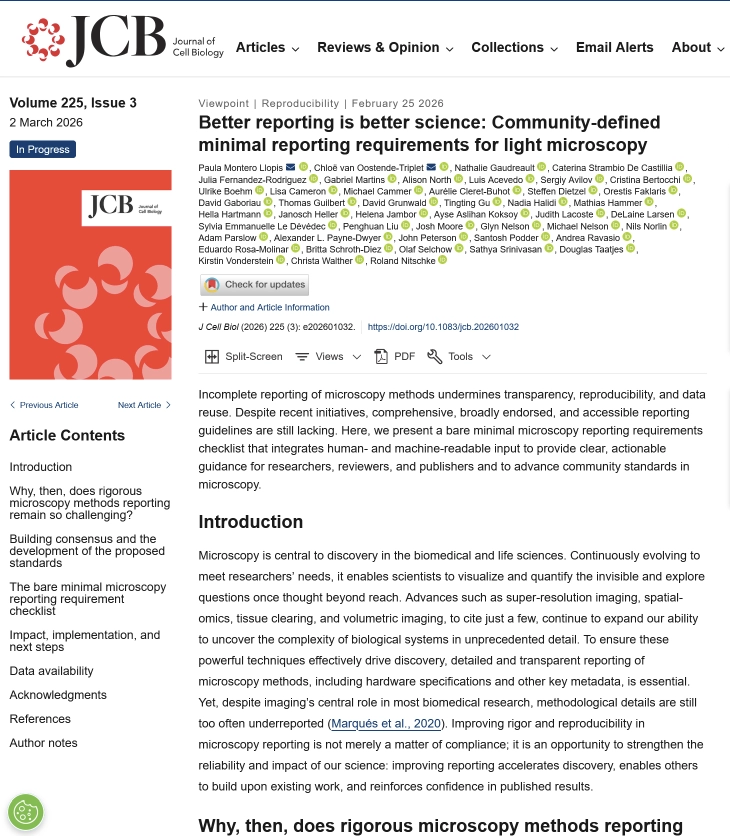
A new article, under the guidance of QUAREP-LiMi WG 11, on the minimal reporting requirements for light microscopy data has been published in the Journal of Cell Biology. You find the article here.
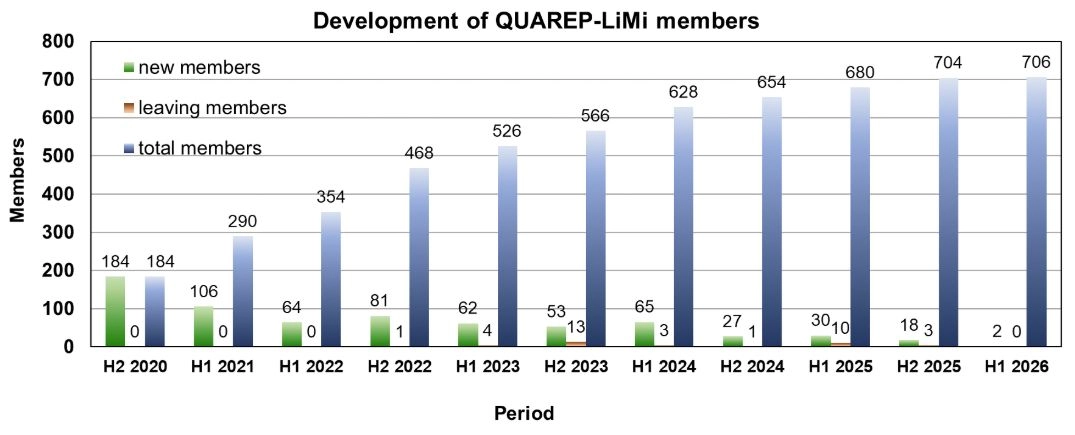
QUAREP-LiMi has reached another milestone. By the end of 2025 more than 700 members have joined QUAREP-LiMi. When we launched this initiative, we never imagined the community would grow to include so many members from 46 different countries around the globe. A heartfelt thank‑you to all our members for your continued support and contributions.
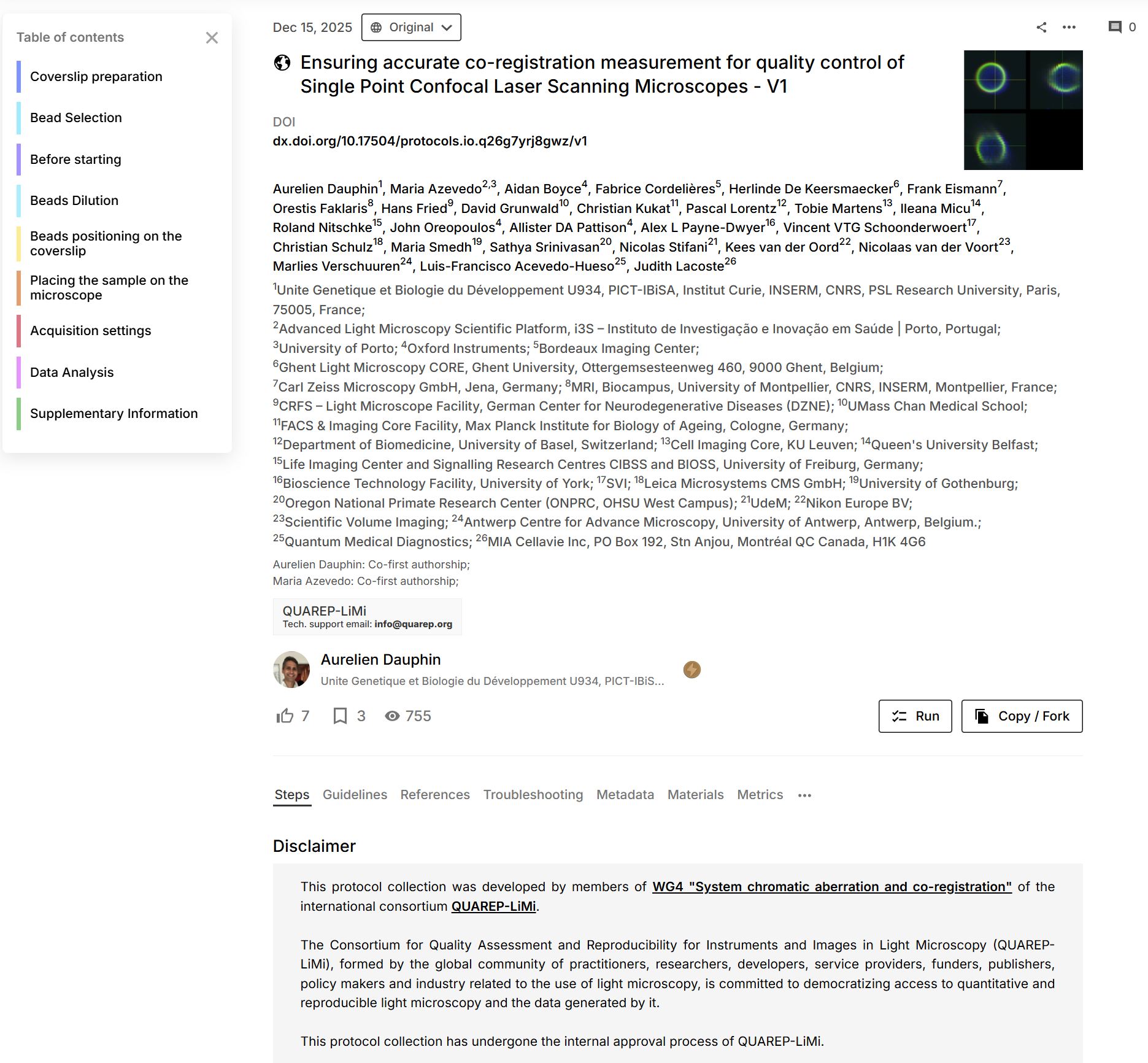
We are thrilled that WG 4 - System chromatic aberration and co-registration Power published its first protocol "Ensuring accurate co-registration measurement for quality control of Single Point Confocal Laser Scanning Microscopes - V1". The protocol is featured on protocols.io

The project “Increased Resource Efficiency in Light Microscopy by Quality Control and Standards” has been selected for funding by the Deutsche Forschungsgemeinschaft (DFG, German Research Foundation). The project supports a collaborative effort led by Dr Roland Nitschke (University of Freiburg), Dr Hella Hartmann (TU Dresden), and Dr Janina Hanne (GerBI-GMB, Konstanz). They will receive approximately one million euros in joint funding for 3 positions over 3 years as part of a nationwide initiative to improve the sustainability of large-scale scientific equipment use.
Three positions are available in this project from now on. For more information download the PDF file. If you want to apply for one of these position use our application form.

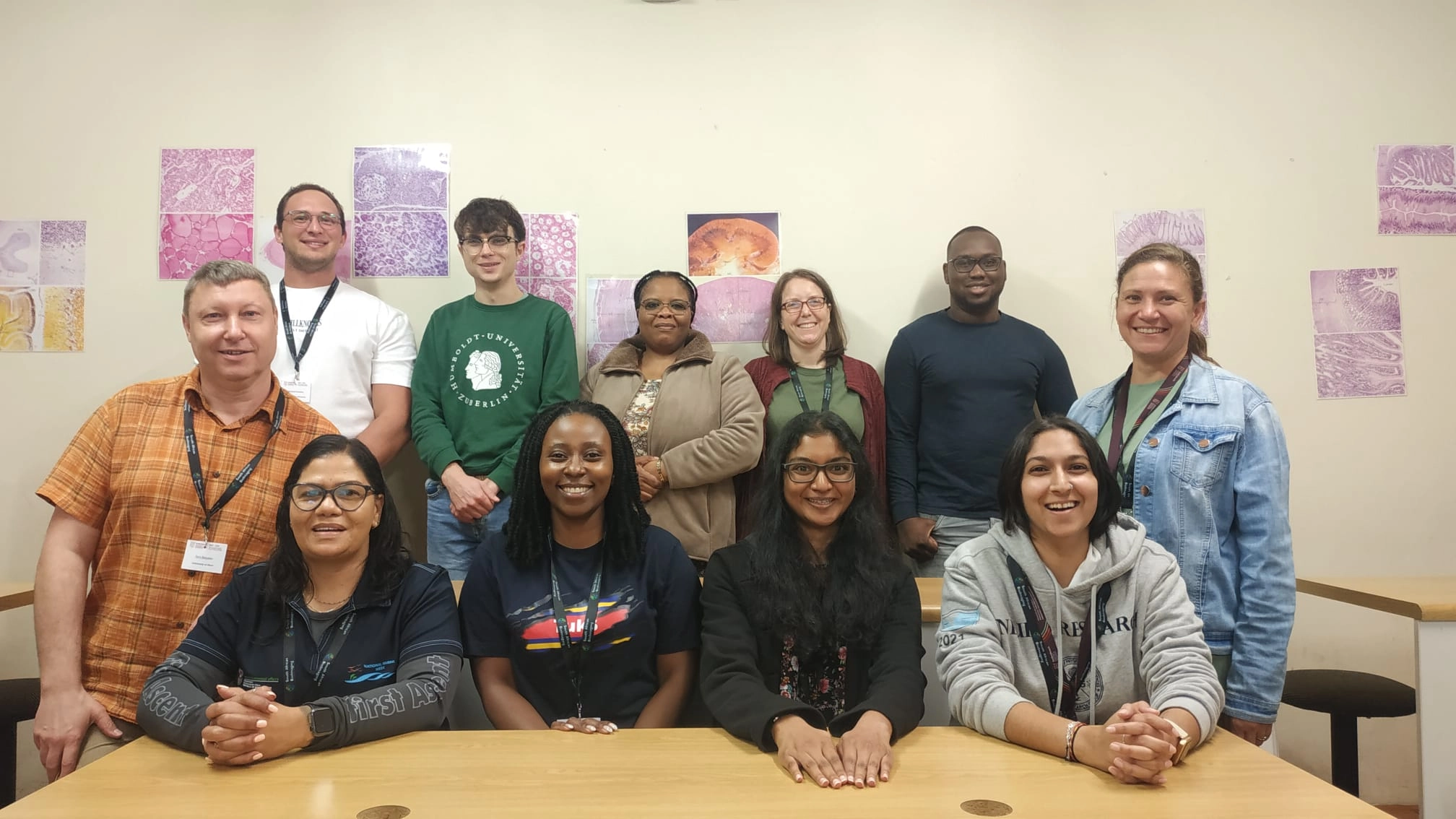
In April 2025, Yury Belyaev from the Microscopy Imaging Center (MIC) at the University of Bern, and a member of QUAREP-LiMi Working Group 5 (WG5), visited the Central Analytical Facilities (CAF) Microscopy Unit at Stellenbosch University, South Africa, as part of the Global BioImaging (GBI) International Job Shadowing Program
During his visit, Yury Belyaev collaborated with Lize Engelbrecht, manager of the CAF Microscopy Unit, to organize a hands-on microscopy workshop. The training covered wide-field and confocal microscopy, image analysis, and microscope maintenance. The event was generously supported by the CoRE Genomics for Health in Africa Scientific Exchange Program and Chroma
The workshop brought together participants from across South Africa and provided an excellent platform for Yury to showcase QUAREP-LiMi's activities, along with other international microscopy and image processing initiatives. A dedicated maintenance day also allowed for the presentation of protocols developed by QUAREP-LiMi, particularly those from WG5 in which Yury is actively involved.
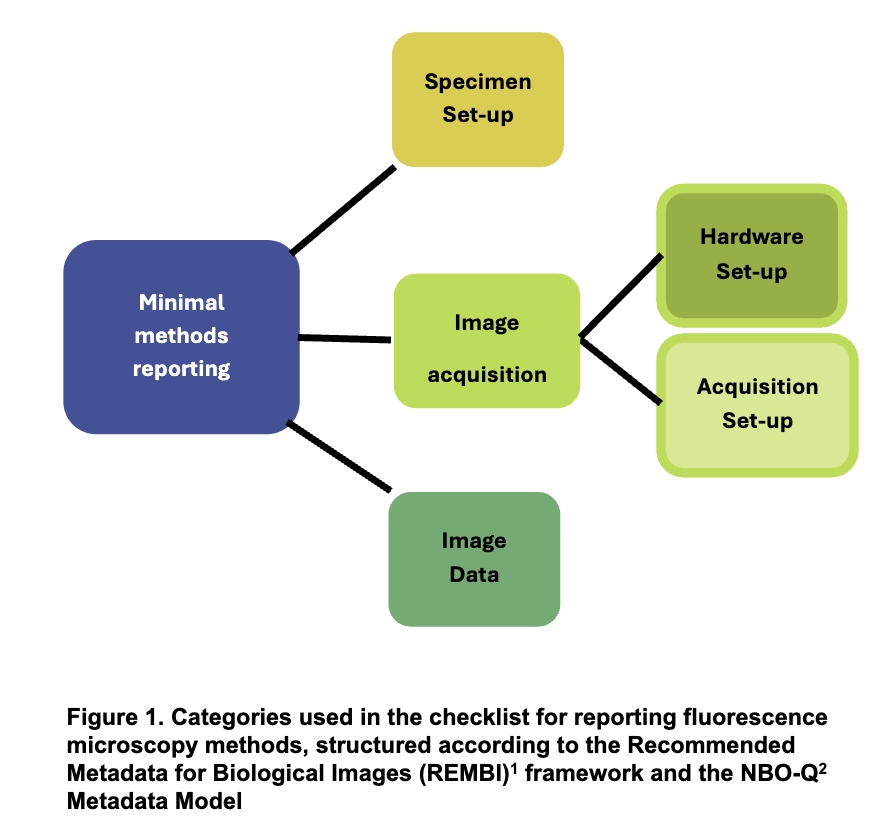
WG11, as part of its mission to enhance publication standards for reproducible image-based science and in response to an inquiry from Nature Methods, has defined the "Bare Minimum Requirements for Microscopy Methods Reporting". This checklist, built upon the REMBI framework and the NBO-Q metadata model, is designed to guide researchers, scientific journals, and editors in the peer-review process, ensuring that microscopy methods across most applications include sufficient details for reproducibility.
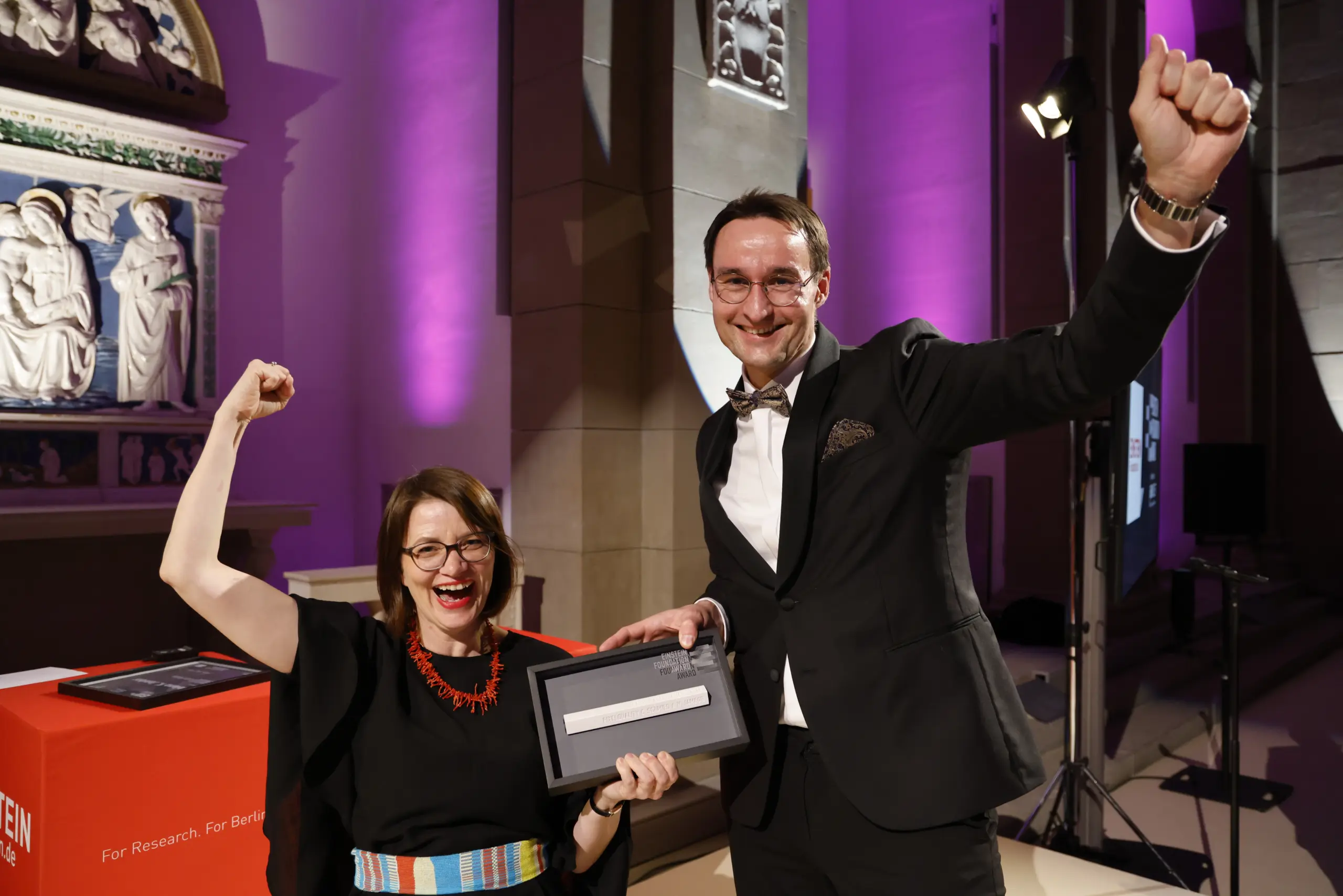
©Copyright Einstein Foundation, Sebastian Gabsch
On Friday, 14.03.2025, Helena Jambor and Christopher Schmied of Quarep-LiMi WG12 were honored at the annual award ceremony of the Einstein Foundation Berlin, held at the Museum Bode in Berlin. They received the Einstein Foundation Early Career Award for promoting research quality with their project: “PixelQuality - Best practices for publishing images.”
The Early Career Award comes with a prize of EUR 100,000. Other award recipients included the platform PubPeer for the Institutional Award and Elisabeth Bik for the Individual Award.
In his keynote speech the former Minister of Education, Culture, and Science of the Netherlands, Robbert Dijkgraaf reflected on Einstein's career and the importance of freedom of science. In their greetings, Governing Mayor of Berlin Kai Wegner and Senator of Research, Health, and Care Ina Czyborra highlighted the significance of research for Berlin.
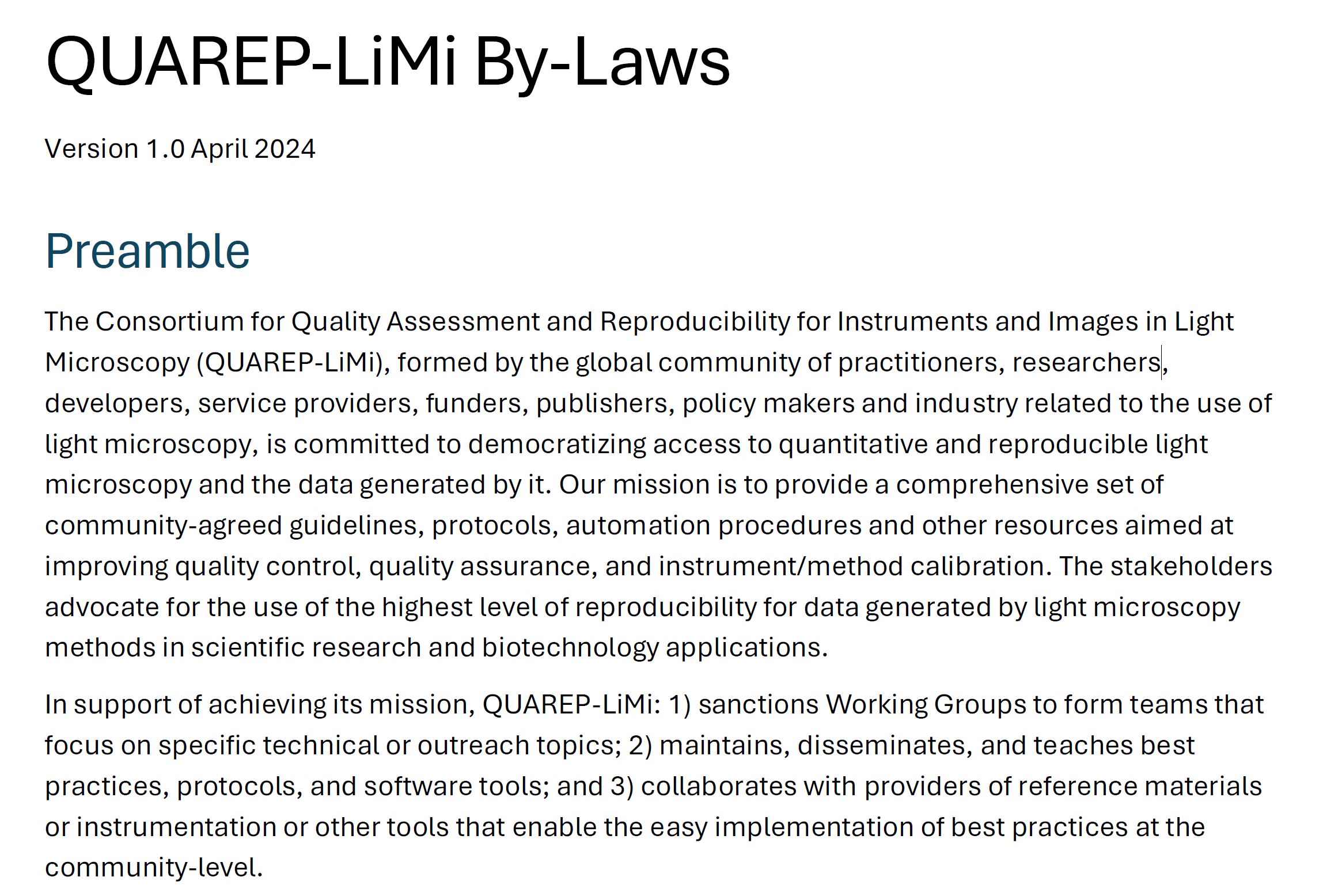
In 2024, QUAREP-LiMi took a significant step forward by developing its By-Laws. Version 1.0 of the QUAREP-LiMi By-Laws has now been published on Zenodo. You can view and download them here::
https://zenodo.org/records/14884071