LiMi-Model for Imaging Scientists

Home / Working Groups / WG 7 – Metadata / LiMi-Model / LiMi-Model for Imaging Scientists

The LiMi Model helps microscopy users & scientists standardize data quality and reproducibility

Microscopy users and imaging scientists benefit from the LiMi Model’s clear, community-driven framework for recording the metadata that matters most—from sample preparation and imaging conditions to microscope hardware and acquisition settings.

By integrating the LiMi-Model into your workflows, you ensure that your image data is not only reproducible and high quality but also compliant with FAIR principles, making it easier to share, publish, and reanalyse.

The LiMi-Model community is actively working to simplify integration with popular data and management tools like OMERO and Micro-Meta App, and standards like OME-Zarr, thus helping you document experiments efficiently and completely without disrupting acquisition routines. Embracing the LiMi-Model enhances the scientific value of your datasets and aligns your work with emerging expectations from journals, funders, and core facilities.


Resources:
Metrology images – QUAREP maintains an OMERO database for storing images relevant to its work on quality control and reproducibility.

Protocols – There are a number of QC protocols available on protocols.io

Publication guidelinesNature Cell Biology and other NPG journals now enforce a minimum reporting checklist based on the LiMi-Model.

ISO standards for microscopy metadata are in development.


Bibliography:
The LiMi-Model – https://doi.org/10.1038/s41592-021-01327-9
OME-NGFF – https://www.nature.com/articles/s41592-021-01326-w
OMERO – https://www.nature.com/articles/nmeth.1896
Micro-Meta App – https://www.nature.com/articles/s41592-021-01315-z

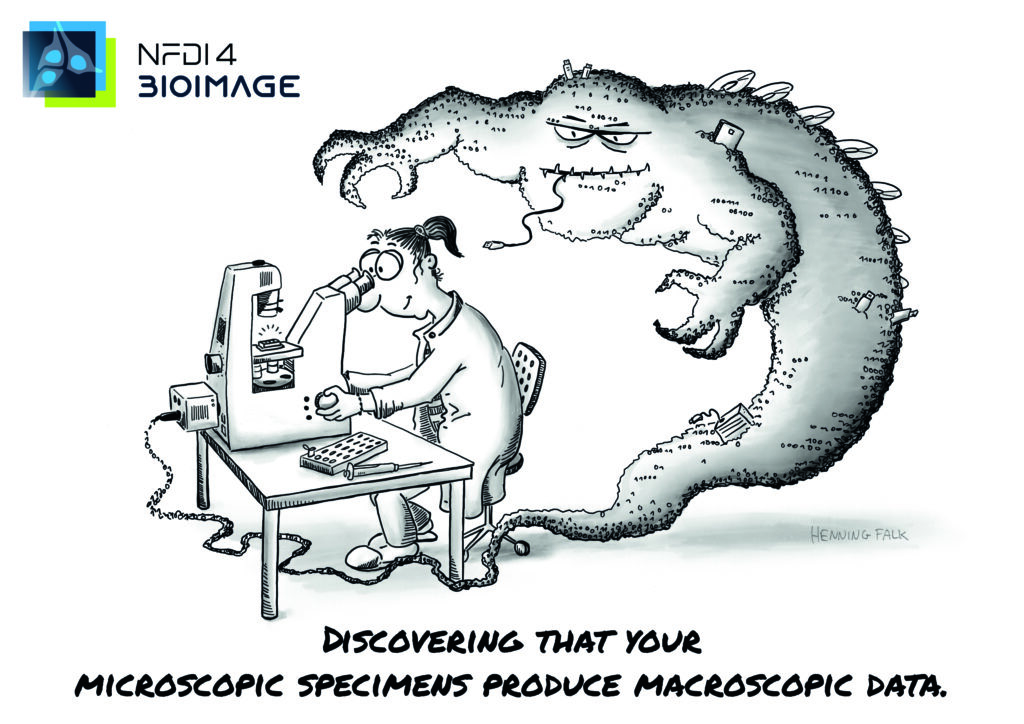
Microscopy modalities often generate large, complex image files stored in proprietary formats, making them difficult to manage and share. To make effective use of these files throughout the research lifecycle, suitable metadata documenting all aspects of the data life-cycle, including light-microscopy acquisition, is needed to promote rigor, reproducibility, and data reuse. The LiMi-Model serves this purpose by extending the REMBI guidelines to document microscopy hardware, image acquisition settings, and quality-control procedures. NFDI4BIOIMAGE data management illustrations by Henning Falk, Zenodo, https://doi.org/10.5281/zenodo.14186100, is used under a CC BY 4.0 license. Modifications to this illustration include cropping.